

Research focus · AMD
AMD: our solution
Predictive autoantibody profiles for a companion diagnostic, and a new antibody therapy for patients who do not respond to anti-VEGF treatment.
01 · Companion diagnostic
Predicting who will respond.
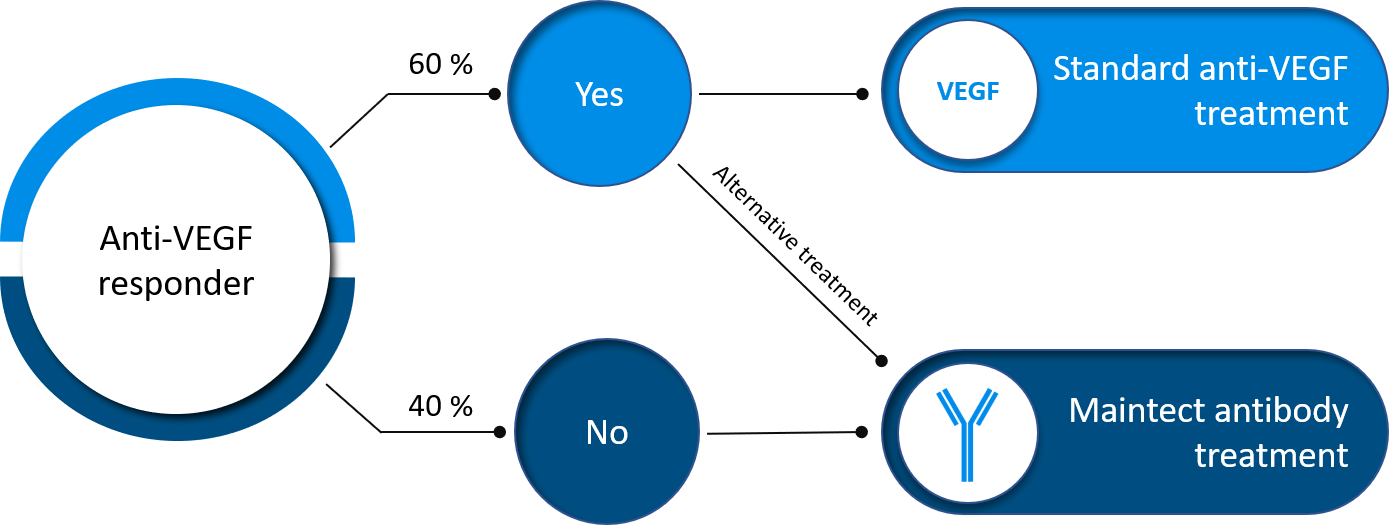
In several clinical studies, we were able to detect autoantibodies that are differentially regulated in AMD patients responding to anti-VEGF treatment, compared to non-responding patients who continue to lose their vision. These altered autoantibody profiles allow us to predict whether a patient will respond to treatment with anti-VEGF or not.
Based on these results, we are developing a saliva-based diagnostic lateral flow assay (LFA) for AMD as a companion diagnostic to guide subsequent treatment decisions.
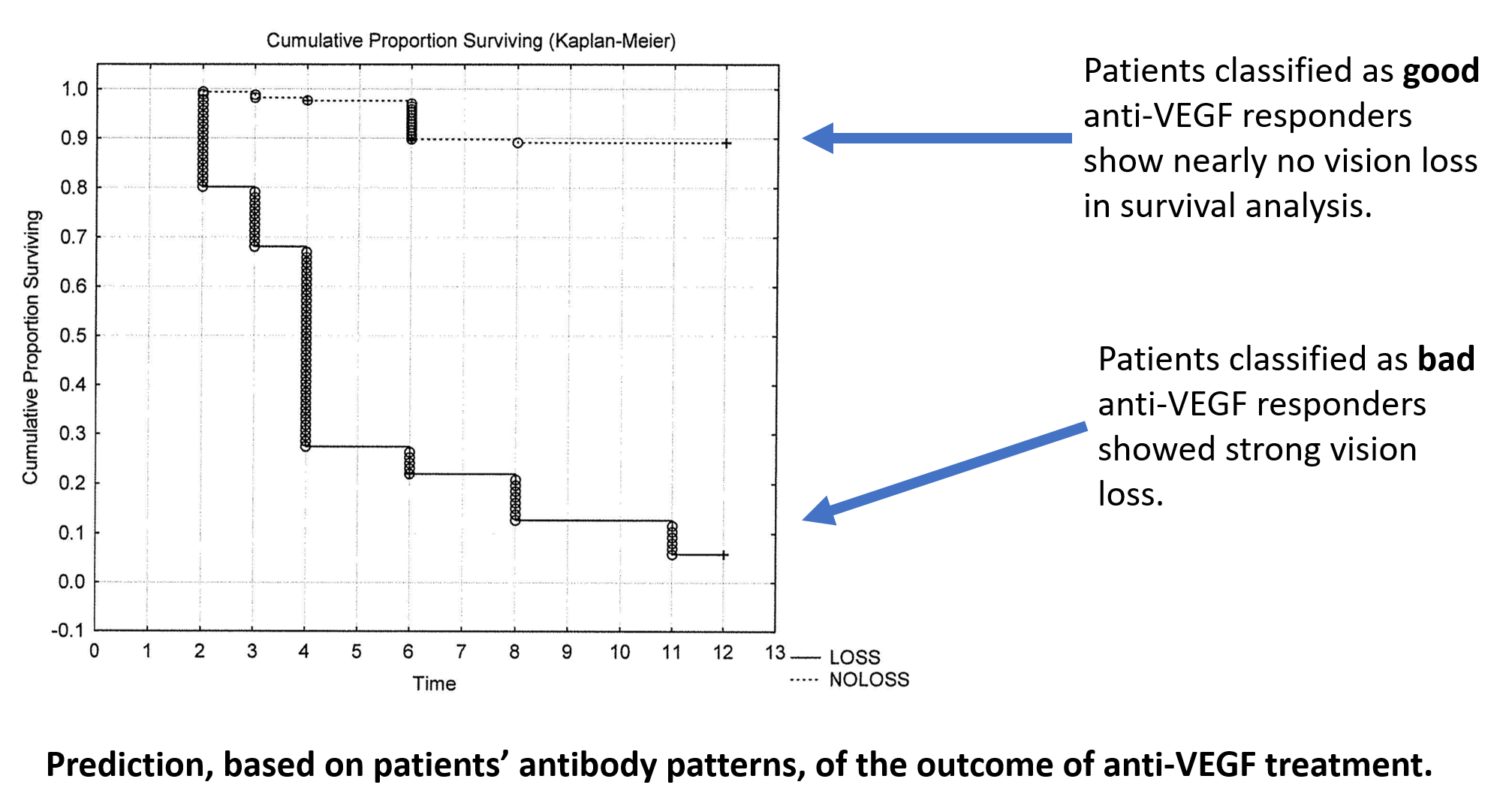
Responders
Continue with confidence
Patients who benefit from anti-VEGF treatment can be identified early.
Reduced responders
Adjust the therapy
More anti-VEGF injections or the synergistic application of another antibody are possible options.
Non-responders
Switch strategy
The expensive anti-VEGF treatment can be stopped and an alternative strategy applied.
02 · Alternative treatment
A completely new therapeutic pathway.
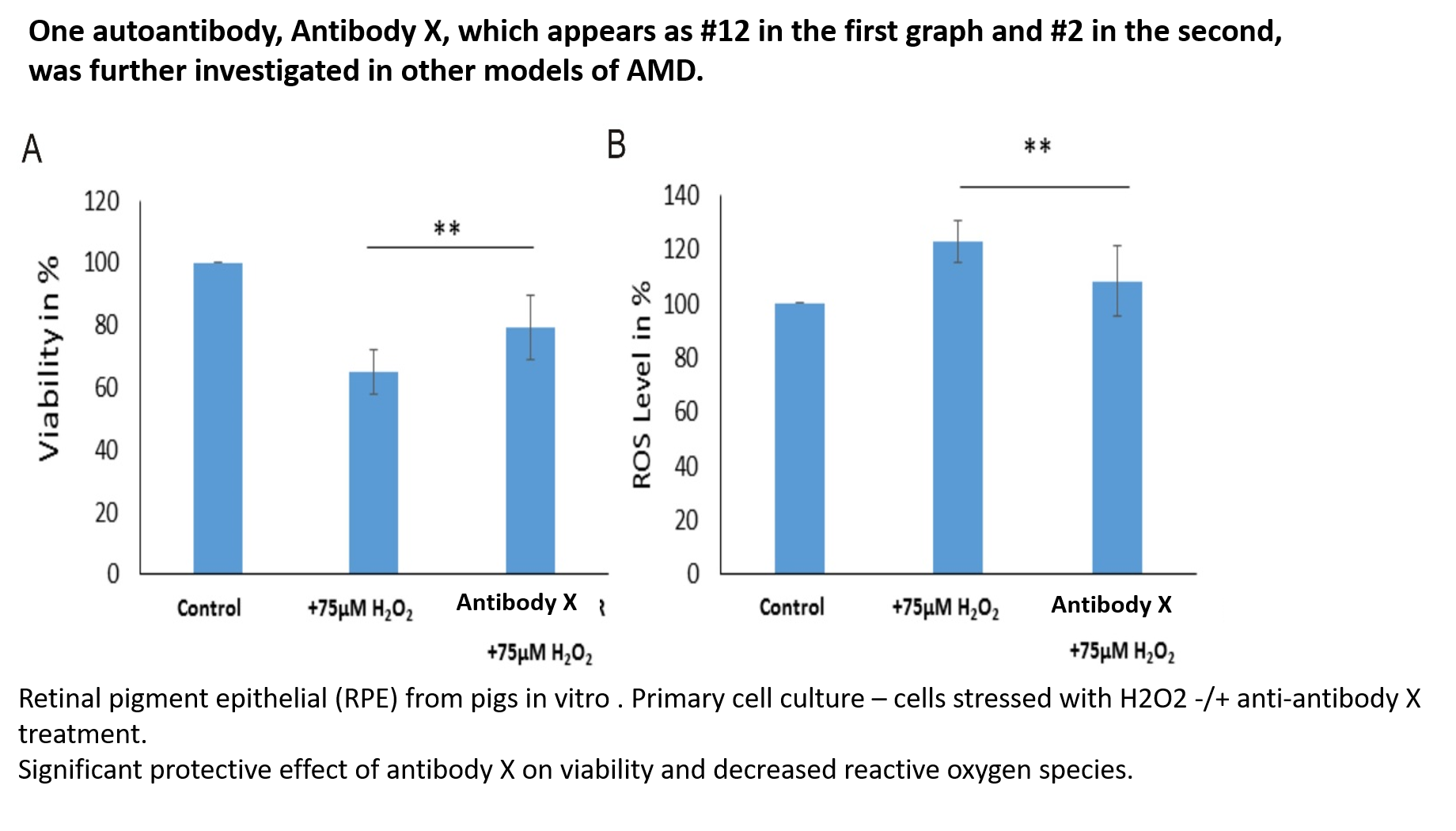
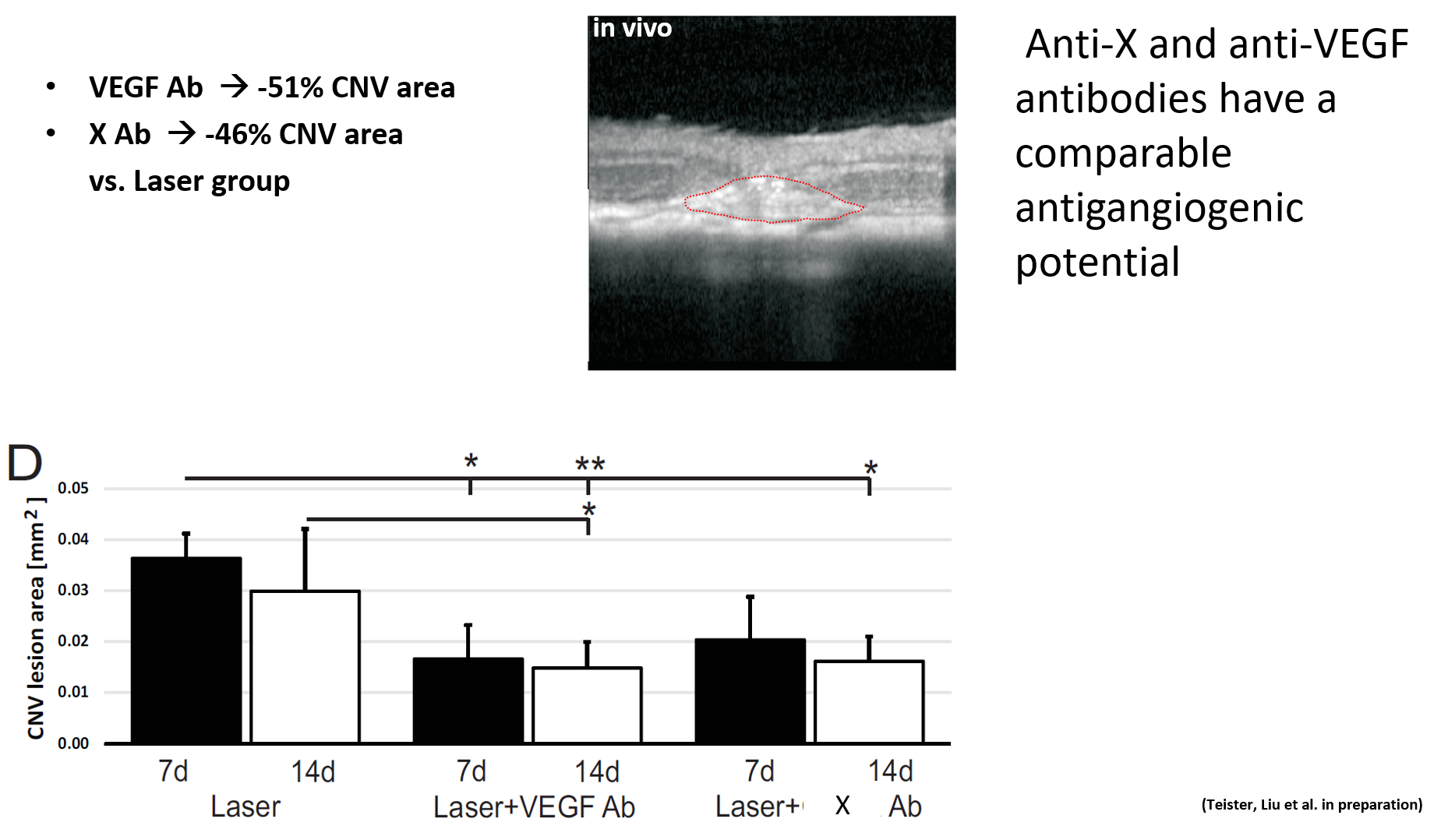
While working on the companion diagnostic LFA, and in light of the variable response to the current gold-standard anti-VEGF treatment, we have developed our own antibody therapy for non-responders. From differences in the autoantibody profiles of wet AMD patients compared to control patients, an alternative target for treatment was found. In in vivo and in vitro studies, the maintect antibody showed very promising results for treating AMD in two different animal models.
Firstly, in vitro studies in H2O2-stressed retinal pigment epithelial cells revealed that the antibody had a significant protective effect on cell viability as well as decreasing reactive oxygen species. This is important, as AMD affects these cells. Secondly, in vivo studies in a mouse AMD model showed an antiangiogenic effect of antibody 125 comparable to the gold-standard anti-VEGF treatment.
Personalized therapy
The right treatment for each patient.
Antibodies present, or absent, in dry or wet AMD are promising targets to be tested as new therapeutic options for non-responders to current treatments. This applies not only to the whole antibody, but also to its paratope sequences (CDR sequences), which may be developed as therapeutic molecules without the problems often associated with whole-antibody treatment. Paratope sequences can be sequenced and synthesized more easily and would offer a more cost-effective alternative.
In addition, the autoantibody profiles of AMD patients provide valuable information about the metabolic pathways involved in the disease. This opens the door to specific drug therapies that target these pathways. The immunological changes found in AMD patients thus offer a way to personalize therapy and give each patient the most promising treatment.
03 · The future
Earlier diagnosis, better outcomes.
AMD is usually diagnosed in the late stages, when visual loss is already present. At maintect, we continue to look for markers that allow early diagnosis of both the dry and the wet form of AMD, and we want to distinguish the two forms with a quick and easy-to-use point-of-care device.
In addition to establishing an early diagnostic tool for dry AMD, determining the risk of conversion from dry AMD into the wet form is another key goal on our path to a personalized and optimized AMD therapy.
References
- Joachim SC, Bruns K, Lackner KJ, Pfeiffer N, Grus FH. Analysis of IgG antibody patterns against retinal antigens and antibodies to alpha-crystallin, GFAP, and alpha-enolase in sera of patients with “wet” age-related macular degeneration. Graefes Arch Clin Exp Ophthalmol 245:619–26, 2007. PubMed
- Grus F, Korb C, Pfeiffer N. Predictive Markers Useful in the Treatment of Wet Age-Related Macular Degeneration. Patent US2019072550 (A1). Google Patents